NEWS
Flashback Saturday - Remember when Synchro Nationals skated Portland ice?!
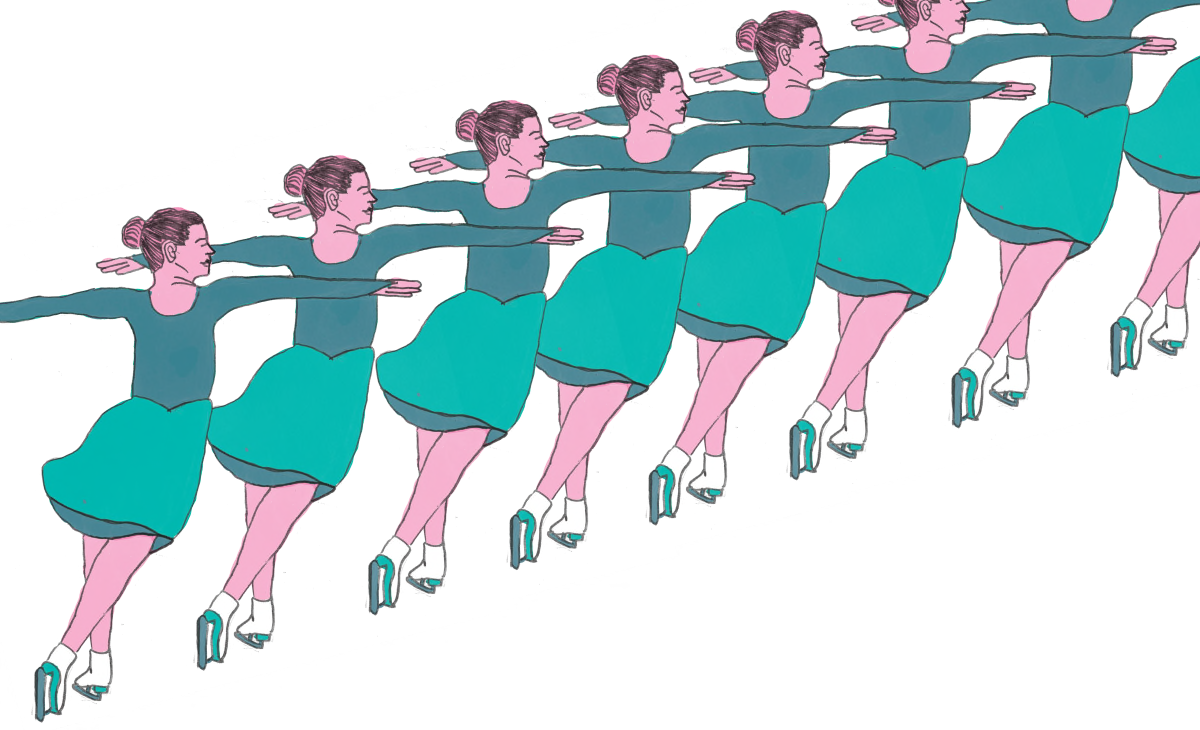
Although considered one of the five official disciplines of figure skating, synchronized skating—in which teams of up to 24 skaters perform elaborately choreographed routines, often at breakneck speeds—is the only one not yet represented at the Olympics. It's hard to imagine why. If two people flinging each other around the ice is worthy of medals, shouldn't two dozen skaters doing it at the same time be 12 times as worthy?

(Ale Carda)
Never Heard of Synchronized Skating? Well the U.S. Championships Are Coming to Portland.
You won't see this sport in the Olympics, here’s everything you need to know.
By Matthew Singer | February 20, 2018
At the moment, 14 of America's best figure skaters are in South Korea, competing against the rest of the world on the grandest stage in sports.
Meanwhile, the other 1,600 are going to be in Portland this week, competing against each other in a dilapidated sports arena.
Although considered one of the five official disciplines of figure skating, synchronized skating—in which teams of up to 24 skaters perform elaborately choreographed routines, often at breakneck speeds—is the only one not yet represented at the Olympics. It's hard to imagine why. If two people flinging each other around the ice is worthy of medals, shouldn't two dozen skaters doing it at the same time be 12 times as worthy?
Leslie Graham thinks so. The senior director of synchronized skating for U.S. Figure Skating understands why it's the odd sport out—it's still a fairly new form. Still, how much longer can the Olympic committee deny a spectacle that combines the grace of figure skating with the speed (and occasional bloodshed) of hockey?
Ahead of the U.S. championships happening in our backyard, we spoke to Graham to find out more about what the Olympics have been missing.

WW: Is it fair to say synchronized skating is the black sheep of the ice sports world?
Leslie Graham: It's definitely the youngest sheep. It's a fairly new discipline. Back in 1956, Dr. Richard Porter had this idea to put a bunch of cheerleaders, essentially, on the ice during intermission at a hockey game. So the first "precision team," as it was then called, was named the Hockettes. But we've only had a national championship since 1984, and we've only had a world championship for 18 years.
What's stopping it from becoming an Olympic sport?
I think the newness of it, and the sheer numbers. Teams can have up to 24 skaters on them. That's a lot of people the Olympics would have to accommodate. I think that's one of the biggest obstacles we have to overcome—just the sheer number of athletes who participate in the sport.
So what exactly goes into it?
Obviously, it's a team sport, and what makes it so special is these athletes are skating as one. They have great unity, but they're skating with a lot of speed and a lot of edgework. We say it's actually a combination of all the different disciplines. You have the jumps and spins of singles. You'll see the intricate footwork of an ice dancing team. You'll actually see, in our senior division, the lifts. So it's really a combination of all our different disciplines—just times 16 skaters.
Is synchronized skating popular in other countries?
It's definitely grown in popularity across the world. Russia has won the last two world championships. The Swedes, the Finns, the U.S. and Canada—those are the five countries who have embraced synchronized skating. I do think we're a leader in our discipline due to the sheer number of teams. We have over 620 registered synchronized skating teams in the U.S.

What's the most difficult move in synchronized skating?
I think the group lifts are pretty remarkable. You'll only see them in the senior division because of the risk involved. Think about it—in synchronized skating, if you have 16 people on the ice, that's 32 blades, that's a lot of fingers. It can be a dangerous sport. So those lifts are a pretty unique but exciting piece of a program.
Have you seen anything grisly like that happen during a routine?
Our hope is that everyone skates clean—that means everyone stays on their feet, basically. Unfortunately, things happen. Skaters are trained from a young age how to protect their fingers and hands, and get in a ball and roll away if you have to, so if there is a fall, it's the least disruptive it can be.
Who are the legendary figures in the sport?
The Haydenettes are a senior team out of Lexington, Mass. They are 25-time national champions. They've also won multiple world medals. I'd say they are the leaders in our country for this sport. They compete in the senior division, which is our top division, kind of the cream of the crop. I'd say they are favorites this year just because of their past competitive experiences.
Is there anything close to a Tonya Harding figure in the synchronized skating world?
Because of the nature of the sport, the athletes are part of a team, and the team is greater than the individual.
How important would it be if synchronized skating ever becomes an Olympic sport?
I think if it was to become an Olympic sport, we'd find a lot more skaters would be interested in it, because right now we don't have that opportunity. There's the opportunity if you're a singles skater or ice dancer or pairs skater that you can eventually compete at the top competition in our world. The World Championships are something our teams strive for, but there's not that carrot of the Olympics.
GO: The 2018 U.S. Synchronized Figure Skating Championships are at Veterans Memorial Coliseum, 300 N Winning Way, on Thursday-Saturday, Feb. 22-24. See rosequarter.comfor schedule and ticket prices.
https://www.wweek.com/culture/2018/02/20/never-heard-of-synchronized-skating-the-u-s-championships-are-coming-to-portland/
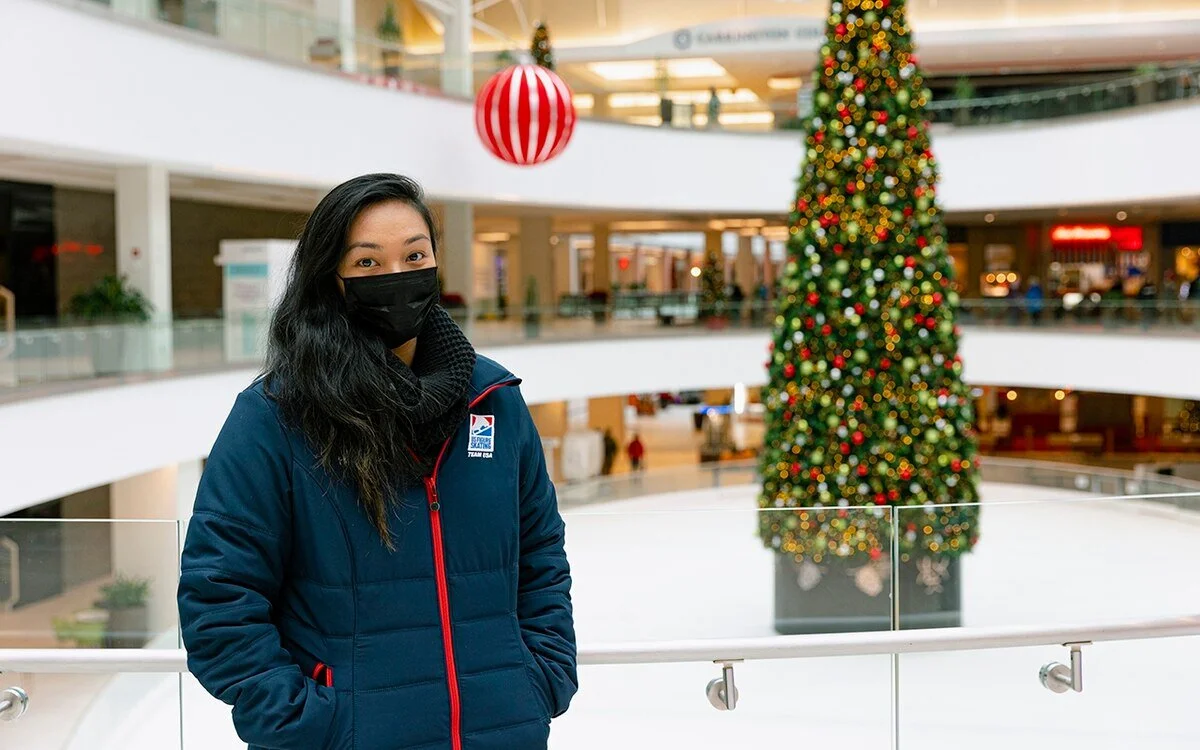
Portland figure skating coach Mari Malama has faced many professional challenges this year. The toughest? Finding an open rink.
When Ice Rinks Closed Around the State, a Portland Figuring Skating Coach Still Found a Way for Her Students to Compete in the National Championships
Portland figure skating coach Mari Malama has faced many professional challenges this year. The toughest? Finding an open rink.

When Ice Rinks Closed Around the State, a Portland Figuring Skating Coach Still Found a Way for Her Students to Compete in the National Championships
Portland figure skating coach Mari Malama has faced many professional challenges this year. The toughest? Finding an open rink.
By Shannon Gormley | Published December 9 at 5:47 AM Updated December 11 at 12:50 PM
Last month, ice skating coach Mari Malama learned her home rink was about to close a few weeks before her student's biggest competition of the year. So she did what any dedicated coach would do: pack up and drive to the nearest open rink.
Where was that? Six hours away in Klamath Falls.
"Skating in general, it always teaches you resilience," she says. "But this year has been a really big test for all of us."
Malama coaches teenage athletes who are part of Portland Ice Skating Club, the city's oldest figure-skating association. Malama's students are high-level, career-minded athletes who usually train for about six hours a day. Every year, all those hours culminate at the U.S. Figure Skating Championship Series, which crowns national champions and helps determine the country's international teams.
This year, the competition is being held virtually. Instead of traveling to a giant arena somewhere as usual, the 10 PISC athletes competing in this year's championship had to perform their routines remotely, under the supervision of a proctor and with their coach filming on a cellphone from the sidelines. Competitors had a three-week window, which closed earlier this week, to record and submit a video of their performance for the championship qualifier round.
Malama coaches two skaters who are competing this year. She usually coaches at Sherwood Ice Arena. But in late November, the statewide freeze shutdown ice rinks across the state for the second time, barely two weeks before the Dec. 8 submission deadline for the championship's qualifier event. Malama had to scramble to find another rink so her students could participate in the competition they had been training for all year.
"We didn't know if our rink would reopen after the freeze," she says. "For me as a coach, you need to provide stability for your athletes. If [the athletes] have a limited time to submit the video, I didn't want to uproot them a day before they have to submit."
She found Klamath Falls' Bill Collier Community Ice Rink. Since it's outdoors, it's one of the few rinks in the state that's allowed to remain open. Two weeks ago, Malama, two of the students she coaches and their families drove from the Portland area to a resort by the rink, where they've been living ever since.
Malama didn't think twice about relocating for almost a month. She says she and her students had been traveling as safely as possible, wearing masks and isolating themselves, except when hitting the ice.
"You do what you have to do, and you have to do whatever it is to get it done," she says. "Having to pick up and go one way or another under short notice, we're kind of unfazed by that already because it's been happening so much this year."
Her students and their parents have been scrambling since the beginning of the pandemic to prepare for the competition. In the early days of lockdown, Malama coached off-ice trainings over Zoom. When rings opened in Washington before Oregon, she and her students drove back and forth to train in Tacoma. Some skaters and their parents would spend the week in Tacoma and only come back home for the weekend. Early in the summer, when the nearest open rink was in Colorado, Malama and PISC drove to Colorado.
"This is happening all over the country," says Malama. "Skaters are doing whatever they can to get back on the ice."
Now that the national championships are over, Malama isn't sure what her next few months will look like. She hopes she can return to her home rink in Sherwood soon, but for now, it's open by private reservation only.
"I hope to be back on our home ice," she says. But if that's not possible, "we will find ice, for sure."
SOURCE: https://www.wweek.com/culture/2020/12/09/when-ice-rinks-closed-around-the-state-a-portland-figuring-skating-coach-still-found-a-way-for-her-students-to-compete-in-the-national-championships/
2005 US Figure Skating Championships in Portland, Oregon
2005 US Figure Skating Championships were the national figure skating championships of the United States for the 2004-05 season. Its results determined the skaters who would qualify for the 2005 World Championships, 2005 Four Continents Championships, and 2005 World Junior Championships, in addition to influencing the selection process for the 2005-06 Grand Prix and 2005-06 Junior Grand Prix series. It was held at the Moda Center in Portland, Oregon for the novice, junior, and senior skaters, and at the Northwest Arena in Jamestown, New York for the juvenile and intermediate skaters.

Ladies' podium from left to right: Jennifer Kirk, Michelle Kwan, Kimmie Meissner, and Sasha Cohen
Michelle Kwan won the ladies event, receiving four 6.0s in the process. This is Kwan's ninth ladies title, tying the record with Maribel Vinson Owen.
Kimmie Meissner attempted a triple Axel in her performance. Many media gave her credit for it, but as of Sunday morning there was no word if USFSA would formally ratify it. It appeared to us in the performance and in the replay that the jump was pre-rotated on the takeoff (a big 1/4 turn skid entering) and cheated more than 1/4 turn on the landing. So we call the jump more than 1/2 turn cheated, even though she came a lot closer than several of the men this week. The first (and only from our point of view) U.S. lady to land a triple Axel in competition was Tonya Harding in 1991.

Johnny Weir
Johnny Weir won the Men's event, successfully defending his title. Just 7 more to go to catch up to Kwan!
1978 USFS Championships in Portland, Oregon
Oregon Skating Council (OSC) was formed as a traditional USFS inter-club association to permit other Oregon clubs to have a role in the planning and execution of the 1978 U.S. Figure Skating Nationals.

It was the first time the U.S. Championships were held in the Northwest since 1969 and first time that Oregon played host to the Championships. Integral to the bid to bring the event to the state was James Lawrence, President of the Oregon Skating Council, which was created by members of three Portland area clubs specifically for the purpose of bringing the event to the area. It was also the first time a multi-club co-operative had been established for the purpose of organizing the U.S. Championships, which drew one hundred entries 'from sea to shining sea'. -Skate Guard Blog
